
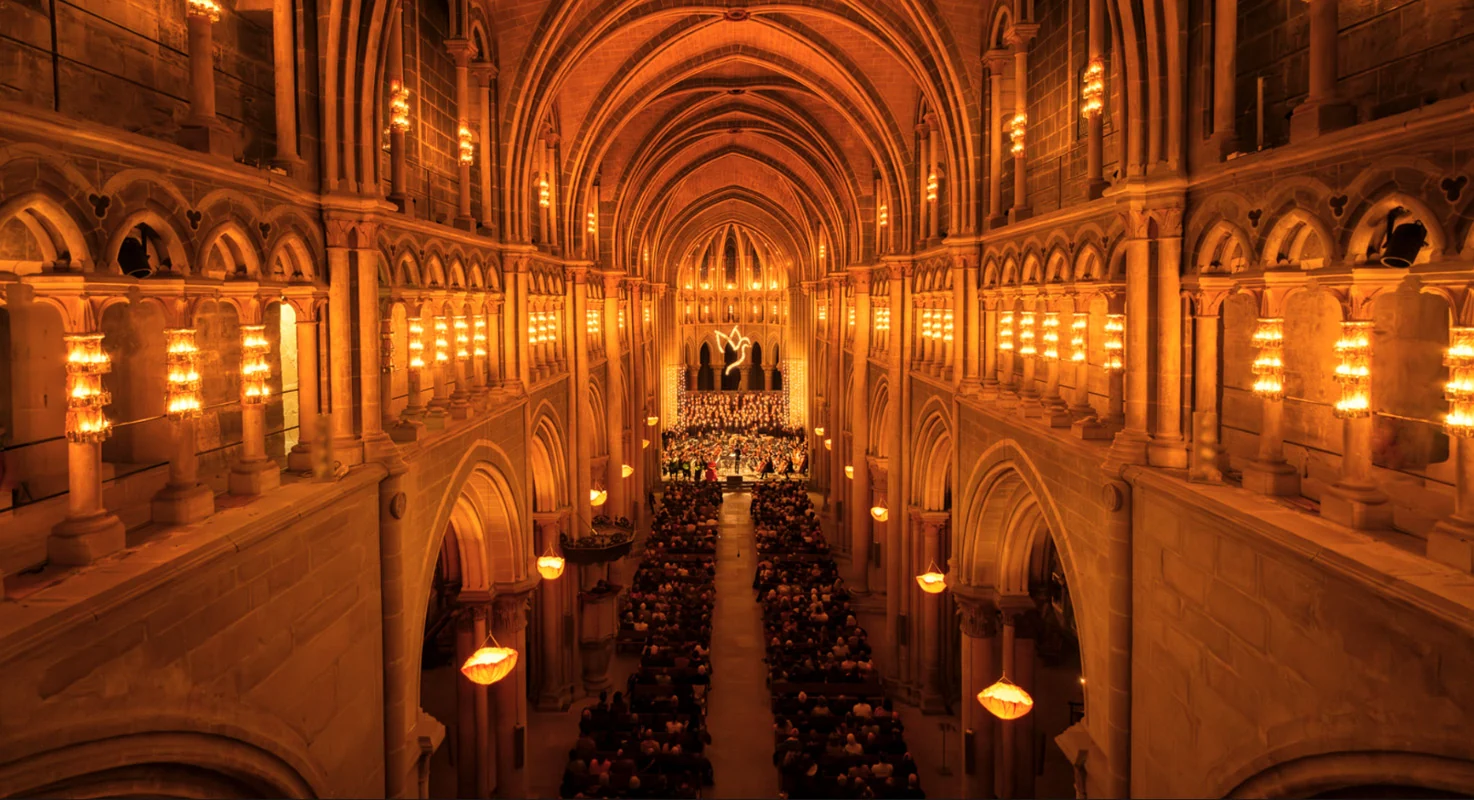
Ludwig van Beethoven (1770–1827)

Musical guide · Virtual Hall®
Form, balance and forward motion
c. 1750–1820, with flexible boundaries
Between Baroque abundance and Romantic intensity, the Classical period seeks music that is lucid, balanced and alive. Haydn, Mozart and Beethoven refine the symphony, string quartet and sonata, yet never reduce music to a fixed recipe.
Around 1750–1820, forms grow clearer and instrumental dialogue becomes more central. Beethoven already presses expression toward Romanticism. The related catalogue brings together Eroica (1803–1804), the Seventh (1811–1812) and the Ninth (1822–1824), plainly after 1820.
Ideas remain easy to follow.
Energy without excess.
Every voice has a role.
Here, “Classical” names a period, not all Western art music; the forthcoming Toy Symphony is traditionally attributed to Leopold Mozart, but remains debated.
Ludwig van Beethoven (1770–1827)
Ludwig van Beethoven (1770–1827)

Virtual Hall® · Media partnerships
 Verbier FestivalDiscover the partnership

Co-founder & Vision | Cybel’Art SA